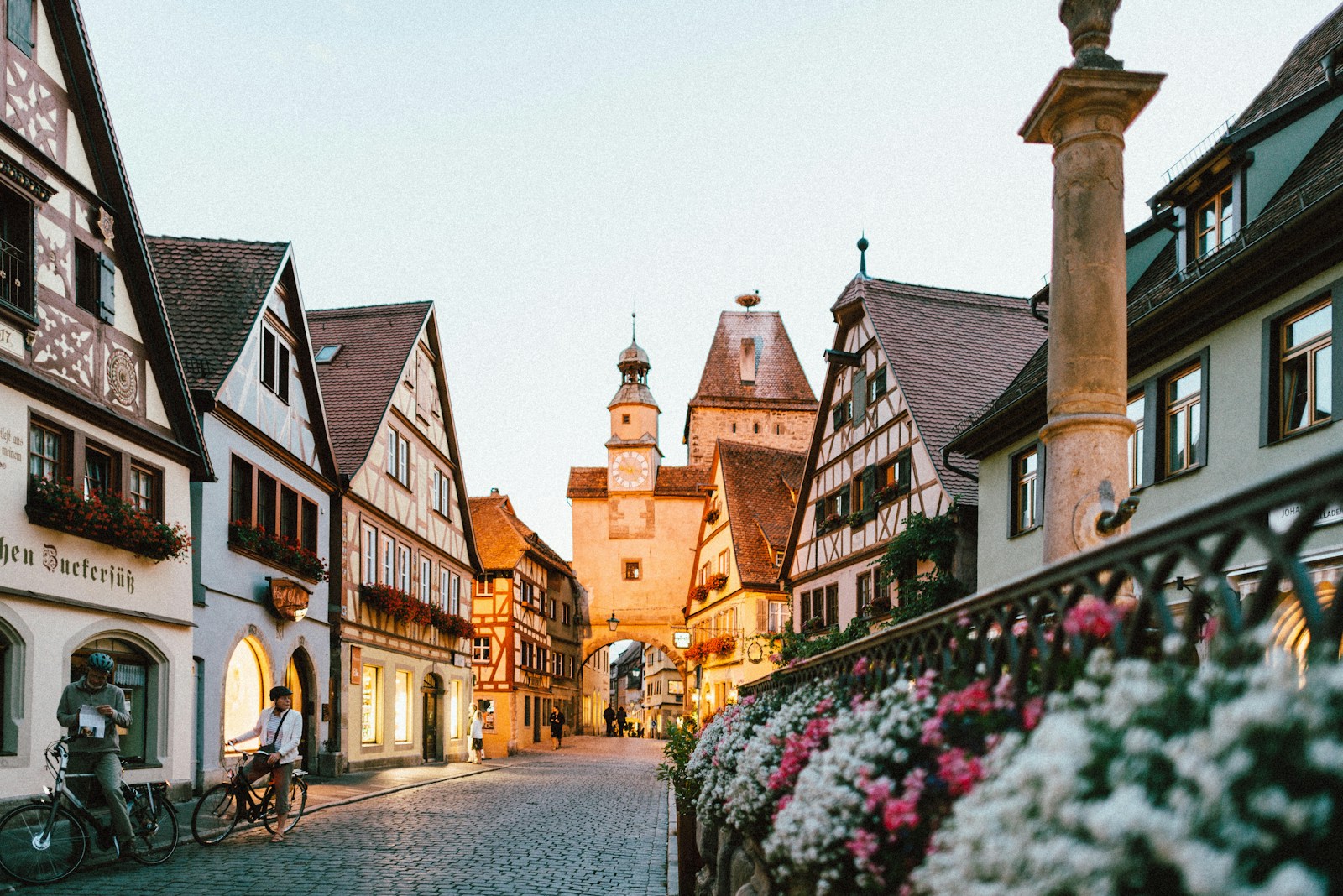
Why Germany?
Europe's largest economy and a top destination for skilled professionals
Germany is the world's fourth-largest economy and Europe's undisputed industrial and technological powerhouse. For skilled professionals, it offers something rare: high salaries, world-class public services, genuine job security, and a path to EU citizenship — all within one of the most stable and well-organised societies on earth. It is not the easiest country to move to, but for those who put in the work, it rewards them generously.
Visa Options
Finding the right pathway to live and work in Germany
Germany offers several distinct visa pathways depending on your qualifications, employment status, and goals. EU and EEA citizens do not need a visa — they can move freely. For everyone else, the right visa depends primarily on whether you already have a job offer, your level of qualification, and your income expectations.
EU Blue Card
Most PopularThe EU Blue Card is Germany's flagship visa for highly qualified professionals with a university degree and a job offer. It offers the fastest path to permanent residency and is the most straightforward route for skilled workers.
| Minimum Salary (General) | €50,700 gross/year (2026) |
| Minimum Salary (Shortage Occupations) | €45,934 gross/year (2026) |
| Shortage Occupations | STEM, doctors, nurses, IT, architects, teachers, vets |
| IT Professionals (no degree) | 3+ years experience + €45,934/year salary |
| Visa Duration | Employment contract + 3 months, max 4 years |
| Permanent Residency | After 27 months (A1 German) or 21 months (B1 German) |
| Family Reunification | Spouse and children can join immediately |
| EU Mobility | Can work in other EU countries after 18 months |
Opportunity Card (Chancenkarte)
Introduced in 2024, the Opportunity Card is a points-based job seeker visa that allows you to come to Germany for up to one year to look for work — without a job offer. You can work part-time (up to 20 hours/week) while searching. Once you find a qualifying job, you convert to a work visa.
| Points Required | Minimum 6 points |
| Points for Qualification | Up to 3 points (recognised degree = 3) |
| Points for Language | German B2 = 3 pts; A2 = 1 pt; English C1 = 1 pt |
| Points for Experience | 2+ years relevant experience = 1 pt |
| Points for Age | Under 35 = 1 pt |
| Points for Germany Connection | Prior study/work in Germany = 1 pt |
| Duration | 1 year (non-renewable) |
| Part-time Work Allowed | Up to 20 hours/week while searching |
Skilled Worker Visa
For qualified professionals with a recognised degree and job offer. No minimum salary threshold (unlike Blue Card), but employer must pay comparable German wages. Good for those who don't meet the Blue Card salary requirement.
Freelance Visa
For artists, journalists, IT consultants, and other self-employed professionals. Requires proof of clients in Germany, sufficient income, and professional qualifications. No fixed salary requirement but must demonstrate viability.
Job Seeker Visa
For qualified professionals with a recognised degree to come to Germany for 6 months to search for work. No points system — requires proof of qualifications and sufficient funds (approx. €5,000). Older than the Opportunity Card.
Cost of Living
What you'll actually spend each month in Germany
Germany's cost of living varies enormously by city. Munich is one of the most expensive cities in Europe; Leipzig is remarkably affordable. The biggest variable is always rent — Germany has a strong rental culture (over 50% of Germans rent), and the market in major cities has tightened significantly over the past five years. Budget carefully and start your housing search early.
Monthly Rent by City (1-Bedroom Apartment)
| Munich | €1,600–€2,200 (centre) / €1,200–€1,600 (outside) |
| Frankfurt | €1,300–€1,800 / €900–€1,300 |
| Hamburg | €1,100–€1,600 / €800–€1,200 |
| Berlin | €1,000–€1,500 / €750–€1,100 |
| Düsseldorf | €1,000–€1,400 / €750–€1,100 |
| Stuttgart | €1,100–€1,500 / €800–€1,200 |
| Cologne | €900–€1,300 / €700–€1,000 |
| Leipzig | €600–€900 / €450–€700 |
Monthly Living Costs (Single Person, Excl. Rent)
| Groceries | €200–€350/month |
| Deutschlandticket (transport) | €29/month — unlimited local/regional travel nationwide |
| Internet (fibre) | €25–€45/month |
| Mobile plan (10GB+) | €10–€25/month |
| Private health insurance (if applicable) | €200–€400/month |
| Gym membership | €25–€50/month |
| Dining out (3–4x/week) | €120–€200/month |
| Total (excl. rent) | €600–€1,100/month |
Everyday Prices
| Coffee (espresso/filter) | €2.50–€4.00 |
| Beer (0.5L, bar) | €3.50–€5.00 |
| Wine (bottle, supermarket) | €5–€12 |
| Lunch menu (restaurant) | €8–€14 |
| Dinner for two (mid-range) | €45–€70 |
| Cinema ticket | €10–€15 |
| Haircut (men's) | €15–€30 |
| Petrol (per litre) | €1.70–€1.90 |
Housing
Renting and buying your home in Germany
Germany is a nation of renters — over 50% of the population rents, and the rental market is well-regulated with strong tenant protections. However, demand in major cities far outstrips supply, and competition for good apartments is fierce. Being prepared with all your documents before you start searching is essential.
Renting
Landlords typically require a Schufa credit check, the last 3 months' payslips (or proof of income), a copy of your passport, and your Anmeldung (address registration). New arrivals often struggle because they lack a Schufa score — consider offering a larger deposit or a guarantor letter.
Deposit is legally capped at 3 months' cold rent. Most contracts are unlimited (unbefristeter Mietvertrag) — you can stay as long as you like. Furnished apartments are available but command a 20–30% premium.
Buying Property
Foreigners can purchase property in Germany without restrictions. The buying process is handled through a notary (Notar) who drafts the purchase contract and registers the transfer. Budget an additional 10–15% of the purchase price for taxes and fees.
Average prices: Munich €7,000–€10,000/sqm; Frankfurt €5,000–€7,000/sqm; Berlin €4,000–€6,000/sqm; Leipzig €2,500–€3,500/sqm.
Property Purchase Costs
| Grunderwerbsteuer (Transfer Tax) | 3.5–6.5% depending on federal state |
| Notary Fees | 1.5–2% of purchase price |
| Land Registry Fee | 0.5–1% of purchase price |
| Estate Agent Commission | Typically split: 3–3.5% each (buyer and seller) |
| Total Additional Costs | Approximately 10–15% of purchase price |
Anmeldung
Germany's mandatory address registration — your most important first step
The Anmeldung (address registration) is the single most important administrative task when moving to Germany. Without it, you cannot open a bank account, get health insurance, receive your tax ID, or sign most contracts. It is legally required within 14 days of moving into a new address and must be done in person at your local Bürgeramt (citizens' office).
Step-by-Step Anmeldung Process
Healthcare
One of the world's best systems — understanding GKV and PKV
Germany has one of the finest healthcare systems in the world. Health insurance is mandatory for all residents — you must be enrolled in either the public statutory system (GKV) or private insurance (PKV). The choice between them depends on your employment status and income, and it has significant long-term financial implications.
Public Insurance (GKV)
Mandatory for employees earning under €73,800/year (2026). Premium is approximately 14.6% of gross salary plus a supplemental contribution of ~1.7%, split equally between employer and employee. Your non-working spouse and children are covered for free under your policy.
Best public insurers for expats: Techniker Krankenkasse (TK) — excellent English service and digital app; AOK; Barmer. TK is the most recommended for new arrivals.
Private Insurance (PKV)
Available to employees earning over €73,800/year, the self-employed, civil servants, and students. Offers better coverage, faster specialist access, private hospital rooms, and direct access to senior doctors. Premiums are based on age and health status at the time of enrollment.
Warning: PKV premiums rise significantly with age, and switching back to GKV is very difficult after 55. Think carefully before choosing PKV — the short-term benefits may not outweigh the long-term costs.
| GKV Premium (employee) | ~7.3% of gross salary + ~0.85% supplemental |
| GKV Premium (employer) | ~7.3% of gross salary (paid on your behalf) |
| GKV Family Coverage | Free for non-working spouse and children |
| PKV (under 35, healthy) | €200–€350/month |
| PKV (40–50) | €350–€500/month |
| GP Consultation | Free (GKV) or direct billing (PKV) |
| Specialist Access | Referral from GP (GKV) or direct (PKV) |
| Emergency Number | 112 (medical) / 110 (police) |
Banking & Taxes
Setting up your finances and understanding the German tax system
Opening a Bank Account
Most German banks require an Anmeldung to open an account. The exception is N26, which allows you to open an account with just a passport and a video ID verification — making it the best option for new arrivals who haven't yet registered. Once you have your Anmeldung, you can open accounts at any bank.
| N26 (recommended for new arrivals) | English app, open without Anmeldung, free basic account |
| Deutsche Bank | Traditional bank, English service, good for mortgages |
| Commerzbank | Free account for new arrivals, wide branch network |
| DKB | Online bank, excellent rates, requires Anmeldung |
| Documents Required (most banks) | Passport, Anmeldung, proof of income/employment |
Income Tax (Einkommensteuer)
Germany has a progressive income tax system with rates ranging from 0% to 45%. The tax-free allowance for 2026 is €11,784/year. Employees are assigned a tax class (Steuerklasse) which determines how much is withheld from their payslip each month.
| Tax-Free Allowance | €11,784/year (2026) |
| 14–42% Progressive Rate | On income €11,784–€277,825 |
| 45% Top Rate | On income above €277,825 |
| Solidarity Surcharge | 5.5% of tax (only for high earners since 2021) |
| Church Tax | 8–9% of income tax (only if registered with a church) |
| Tax Return Deadline | 31 July of the following year (or 28 Feb with a tax adviser) |
Tax Classes (Steuerklassen)
Education
Schools for expat families in Germany
Germany's public education system is free, high quality, and structured around a tripartite system. For expat families, the choice between public and international school depends on how long you plan to stay, your children's ages, and whether German language integration is a priority.
Public Schools
Free and generally excellent. All instruction is in German — most schools offer language support (DaZ — Deutsch als Zweitsprache) for non-native speakers. The tripartite system: Gymnasium (university-track), Realschule (mixed), Hauptschule (vocational). Children are typically streamed at age 10–12.
International Schools
Available in all major cities offering IB, British, American, and French curricula. Fees range from €8,000–€25,000/year. Major options: Berlin International School, Munich International School, Frankfurt International School, Hamburg International School. Waiting lists can be long — apply early.
| University Tuition | Free at public universities (small semester fee of €150–€350) |
| Kindergarten (Kita) | Heavily subsidised — €0–€300/month depending on city and income |
| After-school care (Hort) | Available at most primary schools, subsidised |
| Language Support | DaZ classes available at most public schools |
Transport
Getting around Germany — the best public transport in Europe
Germany has one of the world's finest public transport networks. The Deutschlandticket (€29/month) is a genuine game-changer — it covers all local and regional public transport across the entire country. For intercity travel, Deutsche Bahn's ICE high-speed trains connect major cities in under 2 hours.
| Deutschlandticket | €29/month — unlimited local/regional transport nationwide |
| ICE (Berlin–Munich) | ~4 hours, from €29 with advance booking |
| ICE (Frankfurt–Berlin) | ~4 hours, from €29 with advance booking |
| BahnCard 25 | 25% off all DB tickets — €62.90/year (2nd class) |
| BahnCard 50 | 50% off all DB tickets — €244/year (2nd class) |
| EU Driving Licence | Valid in Germany — no exchange needed |
| Non-EU Driving Licence | Must exchange within 6 months of becoming resident |
| TÜV (Vehicle Inspection) | Mandatory every 2 years |
Culture & Language
Understanding German society and why language matters
Germany has a distinct culture that rewards directness, punctuality, and thoroughness. It can feel cold or blunt to newcomers from more indirect cultures — but once you understand that directness is a sign of respect, not rudeness, social interactions become much easier. German is genuinely essential for full integration outside the major expat hubs.
Punctuality
Being on time is not just polite — it is expected. Arriving late to a meeting or social event without notice is considered genuinely disrespectful.
Direct Communication
Germans say what they mean. A 'no' is a 'no', not a negotiation opener. This directness is valued, not rude — learn to appreciate it.
Sunday Ruhe
Shops are closed on Sundays. Loud noise (DIY, music) is prohibited on Sundays and between 10pm–7am on weekdays (Ruhezeit). Plan your grocery shopping accordingly.
Cash Culture
Germany is still heavily cash-based. Many restaurants, small shops, and market stalls do not accept card. Always carry cash, especially outside major cities.
Recycling
Germany takes recycling extremely seriously. There are separate bins for paper, plastic, glass, and organic waste. The Pfand system gives you a deposit refund on bottles.
Karneval & Oktoberfest
Regional festivals are taken seriously. Cologne's Karneval (February) and Munich's Oktoberfest (September–October) are cultural institutions, not just tourist events.
Best Cities for Expats
Where to live in Germany — an honest comparison
Berlin
Germany's capital and most international city. The largest English-speaking expat community, a booming startup ecosystem, world-class arts and nightlife, and relatively affordable rents (for Germany). The bureaucracy is notoriously slow, but the lifestyle is unmatched. Best for: creatives, tech workers, young professionals.
Munich
Consistently ranked among Europe's most liveable cities. Home to BMW, Siemens, Allianz, and MAN. Beautiful surroundings — the Alps are 45 minutes away. The most expensive city in Germany, but salaries reflect this. Conservative Bavarian culture with a strong sense of community. Best for: engineers, finance professionals, families.
Frankfurt
Germany's financial capital and home to the ECB, Deutsche Bank, and Commerzbank. The most international airport hub in continental Europe — you can be anywhere in Europe in 2 hours. Compact and easy to navigate. Less character than Berlin or Munich but extremely practical for professionals. Best for: finance, consulting, frequent travellers.
Hamburg
Germany's second-largest city and a major port and media hub. Beautiful red-brick architecture, extensive canal system, and a thriving music scene (The Beatles started here). Good work-life balance and a strong sense of civic pride. Rainy but charming. Best for: media, advertising, shipping, and those who appreciate a slower pace.
Leipzig
Leipzig is what Berlin was 15 years ago — affordable, creative, and rapidly growing. Rents are dramatically lower than other major cities, the arts scene is thriving, and the quality of life is excellent. A large university population keeps the city young and energetic. Best for: artists, remote workers, those prioritising affordability.
Honest Pros & Cons
What nobody tells you before you move to Germany
The Genuine Advantages
The Honest Challenges
Your Action Plan
A step-by-step timeline to make the move to Germany
Moving to Germany requires careful preparation — particularly around degree recognition, visa applications, and the Anmeldung process. Here is a realistic timeline for someone applying for the EU Blue Card.
6–12 Months Before
3–6 Months Before
1–3 Months Before
First Week in Germany
First Month
Official Resources
Every website you'll need — curated and verified
Affiliate Disclosure: Some of the links on this page are affiliate links. If you sign up or make a purchase through one of these links, we may earn a small commission — at absolutely no extra cost to you. We only recommend tools and services we genuinely believe in and would use ourselves. Your support helps keep NewDays Abroad free for everyone, and we truly appreciate it. Thank you! 🙏
Every official government portal, trusted property platform, and essential expat resource in one place. All links go directly to the source.
Government & Immigration
The German government's official guide for skilled workers immigrating to Germany
www.make-it-in-germany.comOfficial immigration authority — residence permits, integration courses, asylum
www.bamf.deFind out exactly which visa you need based on your nationality and purpose
www.auswaertiges-amt.deOfficial portal for the points-based Opportunity Card job seeker visa
chancenkarte.comFile your German tax return online, manage your tax affairs
www.elster.deGermany's official employment agency — job listings and career support
www.arbeitsagentur.deReal Estate & Rentals
Germany's largest property portal — rentals and sales nationwide
www.immobilienscout24.deSecond-largest property portal with extensive listings across all cities
www.immowelt.deFlat share listings — ideal for new arrivals looking for furnished rooms
www.wg-gesucht.deFurnished apartments for 1–12 months — perfect while you search long-term
wunderflats.comVerified furnished rentals with virtual tours — popular with expats
www.spotahome.comGet your Schufa credit report — landlords will request this
www.meineschufa.deBanking & Finance
Most expat-friendly bank — English app, open without Anmeldung, free account
n26.comLarge traditional bank with English service and good mortgage products
www.deutsche-bank.deMajor bank with free account for new arrivals, wide branch network
www.commerzbank.deOnline bank with excellent rates — requires Anmeldung to open
www.dkb.deBest exchange rates for sending money internationally
wise.comFind your local tax office for in-person tax queries
www.bzst.deHealth Insurance
Most popular public health insurer for expats — excellent English service
www.tk.deGermany's largest public health insurance provider by membership
www.aok.deLarge public health insurer with good digital services
www.barmer.deDigital-first private health insurer popular with expats and freelancers
www.ottonova.deEnglish-language insurance broker for expats in Germany
feather-insurance.comUser-submitted healthcare quality and cost data for German cities
www.numbeo.comExpat Communities & Resources
Long-running English-language expat forum with years of practical advice
www.toytowngermany.comProfessional expat networking events in Berlin, Munich, Frankfurt, Hamburg
www.internations.orgThe most comprehensive English guide to living in Berlin
allaboutberlin.comOfficial German language courses worldwide — the gold standard
www.goethe.deAffordable local German language classes once you're in Germany
www.vhs.deUser-submitted cost of living data for all major German cities
www.numbeo.comTransport & Getting Around
Germany's national rail network — ICE high-speed trains between cities
www.bahn.de€29/month unlimited travel on all local and regional public transport in Germany
www.deutschlandticket.deBerlin's public transport authority — U-Bahn, S-Bahn, tram, bus
www.bvg.deMunich's public transport network
www.mvv-muenchen.deOfficial process for exchanging your foreign driving licence in Germany
www.kba.deAffordable long-distance bus travel between German cities and across Europe
www.flixbus.deStay Up to Date
Get notified when this guide changes
Germany's EU Blue Card salary thresholds, Opportunity Card points system, and tax rates are updated annually. Subscribing ensures you're always working with current information.
Get Notified When This Guide Updates
German visa rules and tax regulations change. Enter your email and we'll notify you whenever guides are updated with new information.
No spam. Only guide update notifications. Unsubscribe any time.
Enjoying this guide? ☕
NewDays Abroad is 💯 FREE! If you found this guide helpful, a small donation keeps it that way for all! Much Love 🫶
Ready to Make the Move?
Explore our other destination guides or subscribe to our newsletter for the latest visa updates, cost of living reports, and expat stories from around the world.